
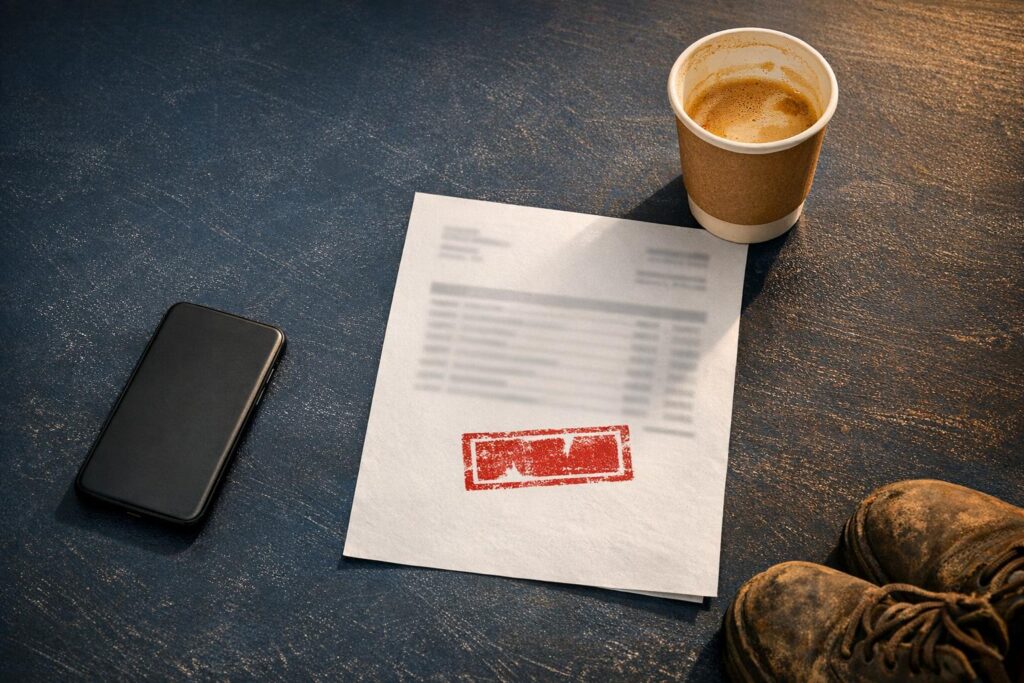
Every tradie has a story about an unpaid invoice. A nice enough job, a handshake, a promise that the transfer will happen on Friday, and then a sort of slow ghosting where the messages stop being answered and the phone goes to voicemail. The amount doesn’t really matter. Two hundred dollars or twenty thousand, it eats at you the same way, because it isn’t just money. It’s the time and the trust and the fuel and the tools and the apprentice’s wage you paid while you were on site.
Chasing an unpaid invoice is a craft. Do it right and most of the time you’ll get paid without wrecking the relationship. Do it wrong and you’ll burn the customer, the referrals, and sometimes your own composure. Here’s the order to work through.
Start with the benefit of the doubt
The first reminder should assume nothing. People lose invoices. They forget. They meant to pay on Friday and it dropped off the list. A short, friendly message a few days after the due date gets the majority of late payers over the line without any friction. Something like: “Hi Sarah, just a gentle reminder that invoice 2184 for the kitchen tap job is due. Happy to send through the details again if you’ve misplaced it.” No passive aggression. No capital letters. No exclamation marks. Treat them like you’d want to be treated if you’d forgotten to pay your own gas bill.
Move to clear expectations, not frustration
If a week goes past and you’ve had nothing, the tone shifts from reminder to expectation. Still polite, still specific. Tell them the invoice is now overdue, tell them when you need it paid by, and tell them what happens next if it isn’t. This is where most tradies get it wrong. They either stay too soft for weeks, or they snap and go straight to threats. Neither works. What works is a calm message that says: “The invoice was due on the fifth. It’s now the nineteenth. Please let me know by Friday either the payment date or what’s holding it up. If I haven’t heard back, I’ll send a formal letter of demand on Monday.”
Pick up the phone
Messages and emails are easy to ignore. A phone call is not. Some of your unpaid invoices are sitting in an inbox the customer has stopped opening because they’re embarrassed or stressed or broke. A direct call cuts through that. Keep it short. “Hi, it’s Dave, I’m calling about invoice 2184. What’s the best date you can have that paid by?” Shut up and let them answer. You’d be surprised how often a real conversation, even an awkward one, ends with a payment that afternoon.
Offer a payment plan before you escalate
Some customers aren’t refusing to pay, they genuinely can’t right now. The job cost more than they expected, the mortgage rate jumped, someone in the family lost work. Offering a short payment plan, two or three instalments over a month or six weeks, gets you most of the money much faster than a drawn-out dispute. Put it in writing. Agree the dates. Have them sign it, even if it’s just a reply-email confirmation. A signed plan is enforceable. A verbal promise is not.
Send a formal letter of demand
If the customer keeps stalling or stops replying, it’s time for a letter of demand. You don’t need a lawyer to draft one. It just needs to say, in writing, that the invoice is overdue, how much is owed, a deadline for payment, and that you will pursue recovery through the courts or a debt collection service if they don’t pay. Send it by email and by registered post. The registered post matters. It’s proof you sent it. Keep the tone businesslike. No threats. No insults. Just a factual statement of where things stand.
Know your recovery options
Most states have a small claims tribunal or equivalent for amounts under a set limit. In New South Wales it’s NCAT. In Victoria it’s VCAT. In Queensland it’s QCAT. Filing fees are low, you don’t need a lawyer, and the process is designed for cases exactly like yours. For larger amounts, a debt collection agency will typically take a percentage of what they recover. They have more tools than you do, and most customers pay as soon as a collector gets involved, because it starts affecting their credit file.
Review the customer on Reviewey
This is the step that stops the same thing happening to the next tradie. Leave an honest review. Don’t vent. Don’t exaggerate. Just describe what happened, how long the invoice was overdue, whether they eventually paid, and how they communicated through the process. Every review a business leaves about a customer builds up that customer’s Good Customer Passport. Over time, serial late payers become visible, and other tradies can decide up-front whether they want to take the job. That’s the whole point of a two-sided review system. You’re not just protecting yourself, you’re protecting every trade business that comes after you.
Protect yourself on the next job
The best way to win this fight is not to have it. Take a reasonable deposit. Invoice on completion of milestones rather than everything at the end. Check a customer’s Passport before you accept the job if the amount is significant. Write your payment terms into the quote and say them out loud before you start. None of this makes you difficult. It makes you a business.